
Few things are more frustrating than turning the key on a cold morning and hearing nothing but a click. Most dead batteries do not fail out of nowhere, though. They wear down over time, and the weather here plays a big role in how fast that happens. Knowing what to expect from your car battery life in Ohio helps you replace it on your schedule instead of on the side of the road.
This guide covers how long batteries usually last, why Ohio’s climate is hard on them, the warning signs of a failing battery, and simple ways to make yours last longer. If your battery has already quit, our battery assistance service can help you get moving again.
How Long Does a Car Battery Usually Last?
When it comes to car battery life in Ohio, most standard batteries last about three to five years. Some go longer, especially in mild climates with lots of highway driving. Others give out in two or three years when they face extreme temperatures, frequent short trips, or electrical problems in the car.
Your driving habits matter as much as the battery brand. A car that sits for days at a time or only makes quick trips to the store never gives the battery a full recharge. Over months, that steady drain shortens its life.
Why Ohio Weather Is Tough on Batteries
Ohio gets both sides of the weather. Summers bring hot, humid days, and winters bring stretches of freezing temperatures and the occasional subzero cold snap. Both extremes take a toll.
Summer heat does the most hidden damage. High temperatures speed up the chemical reactions inside the battery, which causes the internal parts to break down faster and the fluid to evaporate. The battery may still start the car in July, but it comes out of summer weaker than it went in.
Winter cold is when that damage shows up. Cold slows the chemical reaction that produces power, so a battery can lose roughly a third of its strength near freezing and more than half near zero. At the same time, a cold engine needs more power to turn over. That is why so many Ohio drivers find out their battery is weak on the first frigid morning of the year. Put together, the swings in car battery life in Ohio often mean you get closer to three years than five.
Warning Signs Your Battery Is Failing
Even when car battery life in Ohio runs short, a battery usually gives you a few clues before it dies completely. Watch for these signs, especially once your battery is three years old or more.
Slow or Labored Engine Crank
If the engine turns over slowly, sounding like it is struggling before it starts, the battery may not be delivering enough power. This slow crank is often the first warning, and it is usually worse on cold mornings.
Clicking When You Turn the Key
A rapid clicking sound with no engine start usually means the battery has some charge, but not enough to turn the starter. You may need a jump, and the battery likely needs testing soon after.
Dim Lights and Electrical Problems
Headlights that look weaker than usual, a dashboard that flickers, or power windows that move slowly can all point to a weak battery. These signs are easy to notice at night or when the engine is idling.
Battery Warning Light
Many cars have a battery warning light shaped like a small battery on the dashboard. It can mean a problem with the battery, the alternator, or the charging system. Either way, it is worth having checked right away.
Corrosion, Swelling, or a Rotten Egg Smell
Open the hood and look at the battery. White, green, or blue crust around the terminals is battery corrosion, which can block the flow of power. A swollen or bulging case often comes from heat damage. A rotten egg smell can mean the battery is leaking, and it should be replaced as soon as possible.
How to Check Your Battery’s Age and Health
Most batteries have a date sticker or code on the top or side showing when they were made or installed. If yours is four years old or more, it is smart to have it tested before winter, even if it seems fine, since car battery life in Ohio often ends with the first hard freeze.
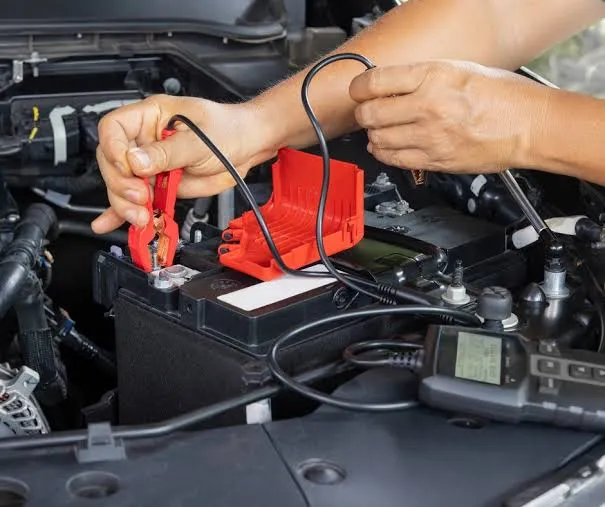
Many auto parts stores offer free battery testing. You can also check it yourself with a multimeter. A fully charged battery should read about 12.6 volts with the engine off. A reading around 12.4 means it is partly drained, and anything near 12.0 or lower means the battery is weak and may soon fail.
Simple Ways to Make Your Battery Last Longer
You cannot stop a battery from aging, but you can slow it down. A few easy habits can help you get the most out of your car battery life in Ohio:
Take a longer drive at least once a week so the alternator can fully recharge the battery. Turn off headlights, interior lights, and chargers before you leave the car. Keep the battery terminals clean and tight, since loose or corroded connections waste power. Park in a garage when you can to protect the battery from extreme heat and cold. If you store a car for weeks at a time, use a battery maintainer to keep it charged.
When to Replace Your Battery
To get the full car battery life in Ohio without getting stranded, replace your battery when it fails a load test, shows physical damage, or keeps needing jumps. If it is four to five years old and you notice any warning signs, it is usually better to replace it before winter than to wait for it to quit.
Pay attention to how the car behaves after a jump start. If it starts fine but dies again a day or two later, the battery may not be holding a charge, or the alternator may not be recharging it. A shop can test both and tell you which part needs attention.
What to Do if Your Battery Dies
If your car will not start, first make sure the lights and accessories are off. If you have jumper cables or a portable jump starter and know how to use them safely, a jump may get you going.
If not, or if you are stuck in a parking lot, on the roadside, or in freezing weather, it is safer to call for help. A jump start service can bring a trained driver to you with the right equipment. If the battery will not take a charge, your car can be towed to a shop for testing and replacement.
Frequently Asked Questions
How long do car batteries last in Ohio?
Most last about three to five years. Ohio’s hot summers and cold winters often push batteries toward the shorter end of that range.
Is heat or cold worse for a car battery?
Heat causes more long-term damage inside the battery, while cold exposes that weakness by reducing its power. Many batteries are damaged in summer and fail the following winter.
Can a car battery die without warning?
It can, but most batteries show signs first, like a slow crank, clicking, dim lights, or a warning light. Regular testing helps you catch problems early.
How often should I test my car battery?
Test it at least once a year after it is three years old, and always before winter. Many auto parts stores test batteries for free.
Does driving short distances drain a car battery?
Yes. Short trips do not give the alternator enough time to fully recharge the battery, which wears it down faster over time.
Can a jump start fix a bad battery?
A jump can get you started, but it will not fix a battery that cannot hold a charge. If your car keeps needing jumps, the battery likely needs to be replaced.
Dead Battery in Columbus? Burm’s Towing Can Help
When your battery gives out at home, at work, or on the road, you do not have to wait around wondering what to do. Burm’s Towing helps drivers across Columbus and Central Ohio with jump starts, battery help, and towing to a shop when a replacement is needed.
Call (614) 290-8512 day or night for fast 24/7 emergency towing and battery help, so a dead battery does not ruin your day.