
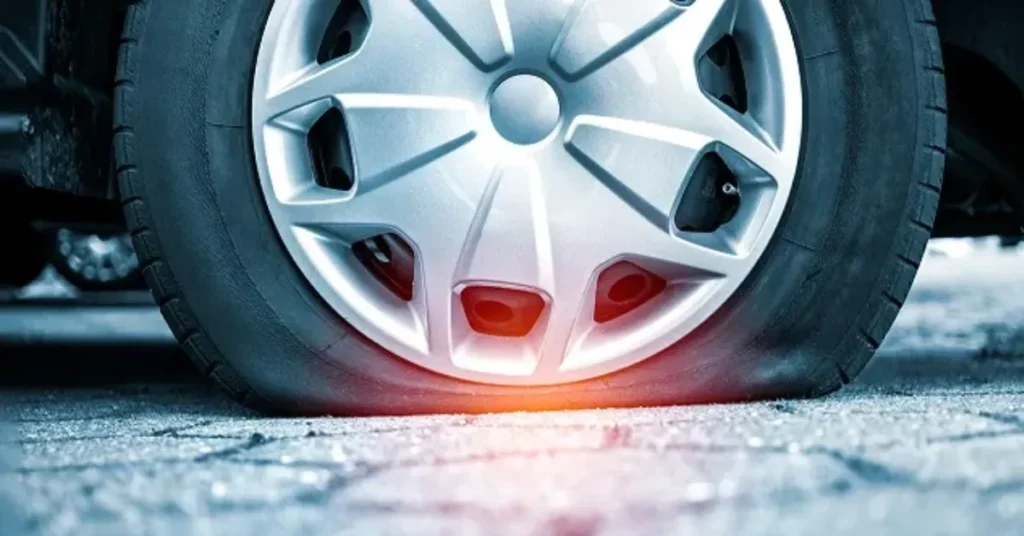
The first cold morning of the season often comes with a surprise: a glowing tire warning light on your dashboard. You did not hit anything, and the tires looked fine yesterday. So what happened? In most cases, the cold itself is to blame. Understanding how tire pressure in winter changes can help you avoid poor handling, uneven wear, and an unexpected flat on an icy road.
This guide explains why tires lose air when temperatures fall, how to check and fix the pressure the right way, and when a low tire is a sign of something bigger. If a tire goes flat on the road, our roadside tire change service can get you rolling again.
Cold Air Takes Up Less Space
Air is made of tiny particles that move faster when they are warm and slower when they are cold. When the temperature drops, the air inside your tires shrinks and pushes less against the tire walls. That means lower pressure, even though no air has actually leaked out.
A common rule of thumb is that tires lose about 1 PSI for every 10 degrees Fahrenheit the temperature drops. In Central Ohio, it is normal for a fall afternoon to sit in the 60s and the next winter morning to dip into the 20s. That 40-degree swing can take 4 PSI out of each tire overnight, which is often enough to trigger the warning light.
Why the Warning Light Comes On, Then Goes Off
Most cars built since 2008 have a tire pressure monitoring system, or TPMS. It turns on a warning light when a tire falls well below the recommended pressure, often around 25 percent low.
On cold mornings, you may see the light come on, then turn off after a few miles. That happens because driving warms the tires, and warm air expands and raises the pressure again. It is easy to ignore, but it is a clear sign your tire pressure in winter is running too low and needs attention.
Other Winter Problems That Cause Air Loss
Cold weather is not the only reason tires lose air this time of year. Winter roads bring their own set of problems, and some of them cause real leaks rather than simple pressure changes.
Potholes open up fast after freeze and thaw cycles. Hitting one hard can bend a wheel rim, break the seal between the tire and the wheel, or damage the tire sidewall. Even a small bend in the rim can cause a slow leak that gets worse over time.
Road salt is another hidden problem. On alloy wheels, salt and moisture can cause corrosion where the tire meets the rim. That rough surface can let air seep out slowly. Cold can also stiffen the rubber in older valve stems, which may start to leak once the temperature drops.
Why Low Tire Pressure Is Riskier in Winter
Underinflated tires do not grip the road as well, and that matters most on wet, slushy, or icy pavement. Low pressure makes the tire tread flatten and flex in ways it was not designed to, which hurts braking and steering control.
Low tires also wear faster on the outer edges, burn more fuel, and run hotter on the highway. In the worst case, a badly underinflated tire can overheat and fail. Keeping your tire pressure in winter at the right level is one of the easiest ways to stay safe on snowy roads.
How to Check Tire Pressure the Right Way
Checking tire pressure in winter should happen once a month, and after any big temperature drop. The best time is in the morning, before you drive, when the tires are cold. That gives you the most accurate reading.
Use a tire pressure gauge instead of guessing by looking at the tire. Remove the valve cap, press the gauge firmly onto the valve stem, and read the number. Check all four tires, and do not forget the spare if your car has one.
Always use the pressure listed on the sticker inside the driver’s door jamb or in your owner’s manual. Do not use the number printed on the tire sidewall. That is the maximum the tire can safely hold, not the right pressure for your car.
What to Do When Your Tires Are Low
If your tire pressure in winter reads a few PSI low, add air at a gas station or with a small home compressor. Fill it to the number on your door sticker, then check again with your gauge, since many station gauges are not very accurate.
Here is a winter tip: if you fill your tires inside a warm garage, they may read low again once you drive out into the cold. Add 1 or 2 PSI above the recommended number when filling in a heated space, then check again outside after the tires cool down.
If one tire keeps losing air faster than the others, you likely have a slow leak. A nail, a damaged valve stem, or a rim problem could be the cause. Have a tire shop look at it soon, because a slow leak can turn into a flat at the worst possible time.
When a Low Tire Becomes a Flat
Sometimes a tire loses so much air that it is no longer safe to drive. If the tire looks visibly flat, you hear a flapping noise, or the car pulls hard to one side, pull over somewhere safe and turn on your hazard lights.
Driving on a flat tire can ruin the tire, damage the wheel, and make the car hard to control, especially on ice. If you do not have a spare or the tools to change it, read our guide on how to fix a flat tire without a spare, or call for help. Winter is the worst time to be kneeling on a cold, busy shoulder trying to change a tire yourself.
Simple Habits to Protect Your Tires All Winter
A few easy habits go a long way. Check pressure every few weeks, keep a gauge in your glove box, and look at your tires before long drives. Watch for nails, cuts, bulges, or worn tread.
It also helps to slow down and steer around potholes when it is safe to do so. And if your tread is getting low, consider replacing your tires or switching to winter tires before the snow gets heavy. Staying on top of tire pressure in winter keeps you safer and saves you money on fuel and early tire wear.
Frequently Asked Questions
How much does tire pressure drop in cold weather?
Most tires lose about 1 PSI for every 10 degrees Fahrenheit the temperature falls. A big overnight cold snap can drop pressure by 3 to 5 PSI in each tire.
Is it normal for the tire light to come on when it is cold?
Yes. Cold air lowers tire pressure, which can trigger the TPMS light. If it goes off after driving a few miles, the tires are still low and should be filled to the right pressure.
Should I let air out of my tires for better grip in snow?
No. Lower pressure hurts handling and braking and can damage the tire. Keep your tires at the pressure on your door sticker for the best grip.
How often should I check tire pressure in winter?
At least once a month, and after any big drop in temperature. Checking in the morning, before driving, gives the most accurate reading.
Does nitrogen keep tire pressure steadier in winter?
Nitrogen leaks out a bit more slowly than regular air, but it still drops in the cold. Regular checks matter more than what you fill the tires with.
What if my tire keeps losing air even after I fill it?
That usually means a slow leak from a nail, a bad valve stem, or a damaged rim. Have the tire checked by a shop before it turns into a flat.
Flat Tire in the Cold? Burm’s Towing Can Help
When a tire goes flat on a freezing morning, you do not have to deal with it alone. Burm’s Towing helps drivers across Columbus and Central Ohio with spare tire changes, flat tire help, and towing to a tire shop when the damage is too much to fix on the spot.
Call (614) 290-8512 day or night for fast roadside assistance and get back on the road safely this winter.