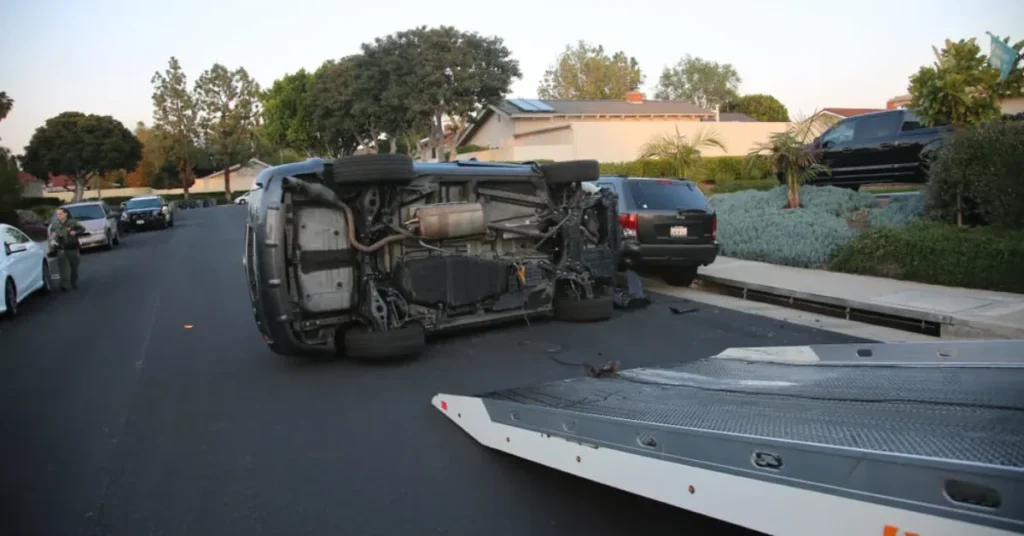
A rollover is one of the most frightening crashes a driver can go through. Once everyone is safe, the car is often left on its side or its roof, leaking fluids and blocking the road. Getting it back on its wheels takes more than a strong truck. Vehicle rollover recovery is a careful, step-by-step job that protects the people at the scene and keeps the car from taking even more damage.
This guide explains how trained tow operators handle a rollover from start to finish, what tools they use, and why you should never try to flip a car back over yourself. If your car has rolled, our accident recovery service is built for exactly this kind of job.
Why Rollovers Are Different From a Normal Tow
A regular tow starts with a car sitting on its wheels. The driver hooks it up or pulls it onto a flatbed and drives away. A rolled vehicle is nothing like that. Its weight is resting on the roof, doors, or side panels, which were never built to hold it. The glass may be broken, the frame may be bent, and fluids can leak from places that are normally sealed.
That changes everything about how the car is handled. Pull it the wrong way and it can slide, flip again, or crush already damaged parts. Vehicle rollover recovery needs planning, extra equipment, and often more than one truck to get the car upright without causing new damage.
Step 1 | Size Up the Scene
Every vehicle rollover recovery starts before any cable is attached, with the operator walking the scene. Police and fire crews make sure no one is still inside and that the area is safe to work. The operator then looks at how the vehicle is resting, what it is touching, and what is around it, like guardrails, ditches, trees, or power lines.
They also check the ground. Soft grass, mud, or ice can change how the car moves once it is pulled. On a highway, the crew works with police to close lanes and set up traffic control so other drivers stay clear while the recovery is underway.
Step 2 | Stabilize the Vehicle
A car lying on its side can shift with very little force. The crew locks it in place before doing anything else. They use wooden blocks called cribbing, wheel chocks, and straps to keep the car from rolling or sliding while they set up the rigging.
Stabilizing also protects the people working nearby. No one goes under or right beside a rolled car until it is secure. This step may look slow from the side of the road, but it is what keeps a bad day from getting worse.
Step 3 | Control Leaks and Hazards
When a car turns over, oil, coolant, brake fluid, and fuel can drain out of the engine and tank. The crew lays down absorbent material to soak up spills and keeps them out of storm drains and ditches. If there is a fuel leak, the fire department may stay on scene until it is under control.
Electric and hybrid vehicles add another layer of risk. A damaged high-voltage battery can overheat or catch fire, sometimes hours later. Fire crews often check these cars first, and the tow operator follows their guidance on how close to work and how to move the car.
Step 4 | Set Up the Rigging
Next comes the rigging, which is the setup of chains, straps, and cables used to roll the car back over. Operators attach to strong points on the frame or wheels, not to bumpers, door handles, or thin body panels that can tear away. Many crews use soft recovery straps around the wheels or axles because they grip well and are less likely to scratch or bend parts.
A snatch block, which is a heavy-duty pulley, lets the operator change the direction of the pull and spread the force more evenly. The goal is to roll the car smoothly, not yank it, so the angle and anchor points are checked twice before anyone starts the winch.
Step 5 | Use a Second Line to Control the Roll
This is the part most people never see. When a car tips back onto its wheels, it can slam down hard or keep rolling past the point it should stop. To prevent that, operators often use two lines. One line does the pulling, and a second line, often from another truck, acts as a brake by holding the car from the other side.
As the main winch slowly pulls the vehicle up, the holding line lets out just enough slack to let it lower gently onto its wheels. This controlled roll keeps the suspension, wheels, and frame from taking a final hit. It is one of the biggest reasons vehicle rollover recovery should only be done by trained crews with the right trucks.
Step 6 | Check the Vehicle and Load It
Once the car is back on its wheels, the vehicle rollover recovery crew checks it before moving it. They look for leaking fluids, broken wheels, flat tires, and loose parts that could fall off during the trip. Any loose glass or trim is cleared or secured.
Most rolled vehicles go onto a flatbed tow truck, since the damage usually makes it unsafe to tow them on their wheels. If a wheel will not turn, the crew may use wheel dollies or winch the car carefully onto the bed. Larger vehicles, like box trucks and big SUVs, may need heavy-duty towing equipment instead.
Step 7 | Clean Up the Road
The job is not finished until the road is clear. The crew sweeps up broken glass, plastic, and metal, picks up any parts left behind, and removes the absorbent used for spills. Only then can police reopen the lanes.
This cleanup is an important part of vehicle rollover recovery. Debris left on the road can puncture tires or cause another crash, so a careful crew makes sure the area is as clean as it was before the accident.
Why You Should Never Try to Flip a Car Yourself
After a rollover, some people want to push the car back over to get it off the road faster. Please do not try it. A car can weigh 3,000 to 5,000 pounds or more, and it can shift without warning. People have been badly hurt trying to rock or push a car back onto its wheels.
Using another vehicle and a chain is just as risky. Chains can snap, cars can roll the wrong way, and a strong pull can rip parts off or cause more damage than the crash did. Leave the vehicle rollover recovery to a tow operator with the right equipment and training.
What to Do After a Rollover
If you are in a rollover, your safety comes first. Get out only if it is safe, move away from traffic, and call 911. Let police and fire crews check for injuries, fuel leaks, and other dangers.
Once the scene is safe, call your insurance company and a tow company you trust. Take photos of the car and the scene if you can do so safely. Ask the tow operator where your car will be taken, and keep their phone number so you can follow up later.
Frequently Asked Questions
How long does rollover recovery take?
It depends on the vehicle, where it landed, and how badly it is damaged. A simple rollover on flat ground may take 30 to 60 minutes. A car in a ditch, on a slope, or against a guardrail can take longer.
Can a rolled car be driven after it is turned back over?
Usually not. Even if the car looks okay, a rollover can damage the roof, frame, suspension, and engine. It should be towed to a shop and inspected before anyone drives it.
Does insurance cover rollover recovery?
Many auto policies cover towing and recovery after a crash, especially if you have collision coverage. Call your insurer and keep every receipt so you can file for payment.
Why does rollover recovery cost more than a normal tow?
It takes more time, more equipment, and sometimes two trucks and a larger crew. The extra steps protect your car and the people working at the scene.
Is rollover recovery different for electric cars?
Yes. Damaged EV batteries can overheat or catch fire, so fire crews often check them first. The tow operator follows their guidance and may need extra space and time to move the car safely.
Will my car be totaled after a rollover?
Not always, but rollovers often cause roof and frame damage that is costly to fix. Your insurance adjuster will inspect the car and decide whether to repair it or call it a total loss.
Need Rollover Recovery in Columbus? Call Burm’s Towing
When your vehicle is on its side or roof, you need a crew that knows how to bring it back over without making the damage worse. Burm’s Towing handles rollover recovery, scene cleanup, and flatbed transport across Columbus and Central Ohio.
Call (614) 290-8512 day or night for fast 24/7 emergency towing and recovery after any rollover crash.